By: Julio Alas (él, he, him), Cohort 14
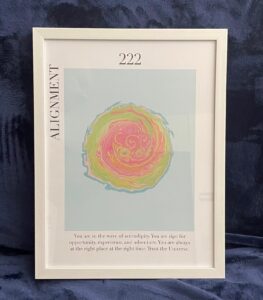
Recently, I was gifted a beautiful image and quote from a dear friend that reads:
“You are in the wave of serendipity. You are ripe for opportunity, experience, and adventure. You are always at the right place at the right time. Trust the Universe.”
This gift arrived at a pivotal moment in my life, as I was completing my doctoral degree at the University of Colorado Denver, a time marked by excitement, exhaustion, new opportunities, reflection, and stress.
However, the words inscribed on this gift were a helpful reminder of a life lesson the Buell Early Childhood Leadership Program (BECLP) taught me on the importance of letting go, walking into the unknown without any prejudgement or expectations, and trusting that the spirit of human connection, relationships and co-creation will allow for new thinking and solutions to emerge organically and authentically. Embracing this lesson was a challenge; as someone who prefers predictability, my time in the BECLP and CU Denver transformed me into a leader willing to suspend judgment, listen deeply, and embrace the unknown by leaning into my curiosity, co-creating future visions with communities.
How BECLP Transformed My Approach to Collaborative Learning and Equity
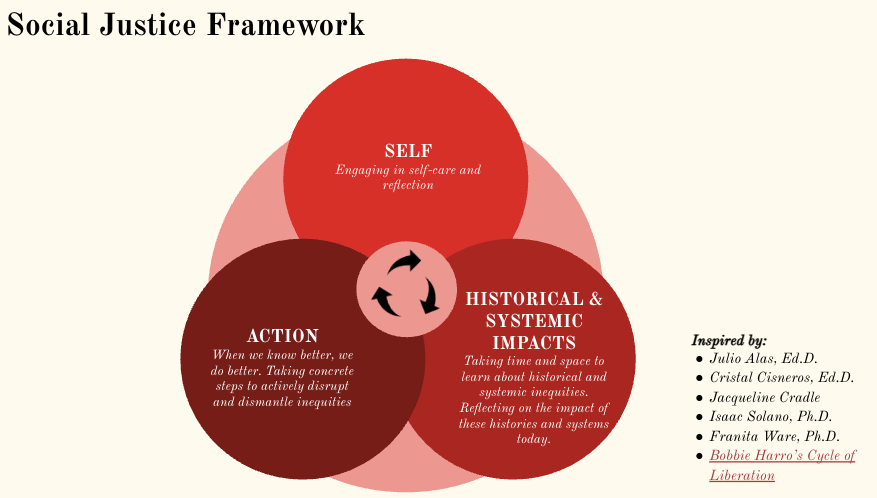
I credit my time in the BECLP for exposing me to tools and ideas for how we as early childhood leaders can lean into problems and community with open minds, hearts, and bodies. As Buellers we are encouraged to spend time cultivating relationships with community members and people we serve, listening to their needs and hopes for early childhood, and collectively exchange ideas and engage in dialogue that may generate new thinking and reimagined early childhood systems that allow for liberation and social justice. This included hands-on experiences that delved into concepts of participatory action research, which pushed me to step out of my comfort zone and connect with people I had only known as acquaintances. This work allowed me to connect with colleagues I had always wanted to collaborate with, but had never quite found the “right” time to send that introductory email asking for their support. Their thinking enabled me to co-construct a social justice framework, which in turn helped me develop a capstone project to engage with young children and their families, exploring their perspectives on liberatory pedagogy. This, coupled with the liberatory practices of my BECLP instructors, I experienced a reimagined higher education that disrupted traditional methods of teaching and learning through collaborative syllabi and student-driven projects. This reignited my passion for social justice in early childhood, ultimately leading me to pursue an EdD in Leadership for Educational Equity.
Community-Centered Doctoral Research: Reimagining Early Childhood Systems
Three years later, as a first-generation, queer, Latino doctoral graduate, I continue seeking new paths to reimagine early childhood systems for all. The skills I honed in participatory action research, critical race theory, and appreciative inquiry guide me. As Dr. John Dugan shared with me and my fellow Buell 14ers (how us Cohort 14 folks refer to ourselves) during our time in the program, ‘the answers to the problems we face are in the community.’ My doctoral journey took this to heart, elevating the voices of rural, immigrant, Latina mothers on preschool quality and their engagement with the Colorado Shines Quality Rating Improvement System.
My doctoral research project allowed me the opportunity to connect with community members in the Roaring Fork Valley of Colorado to learn more about strengths, challenges, and opportunities from their point of view that could help early childhood partners at the local, state and national levels to reconceptualize preschool quality in ways that honor the community wisdom that is too often overlooked. My case study included the perspectives of seven Latina mothers, who bravely shared personal and vulnerable stories, helping me understand their values and ideas for preschool quality. The insights gathered from this study offer ideas on how key early childhood organizations, such as the Colorado Department of Early Childhood, Early Milestones Colorado, and various local preschool programs and organizations, can engage families in discussions about what constitutes preschool quality at the local level. This engagement can help clarify and contextualize the often standardized and generalized definitions of quality used at the national and state levels.
How will you Co-Create Liberatory Futures for Colorado Children and Families?
However, more importantly, this work was made possible by my ability to let go, wonder with others, and suspend judgment, leading to invaluable insights I will elevate with Early Milestones Colorado’s support. We aim to share these results, demonstrating to partners the importance of challenging dominant narratives that overlook marginalized voices. With this in mind, I also hope this blog post reminds fellow Buellers and other early childhood leaders and professionals that the community holds the answers we may be seeking. And by embracing the unknown with open hearts, I encourage you to lean into that curiosity and see what emerges as you co-create liberatory futures for all children and families in Colorado and beyond.